Showing posts with label lizards. Show all posts

Wednesday, April 24, 2024

Gecko Morphs and Genetics!


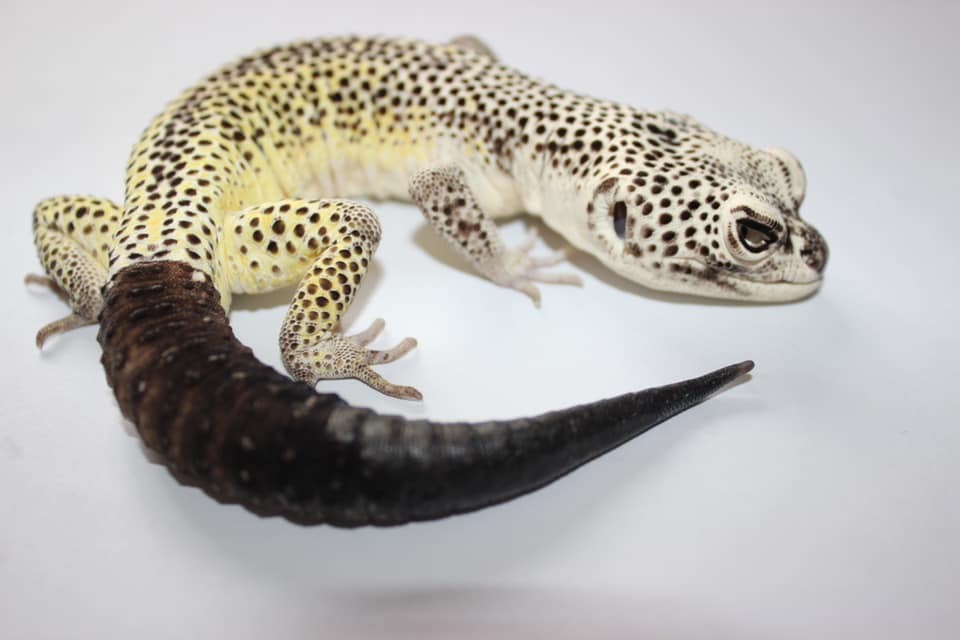
This article discusses the genetics of a specific leopard gecko morph. In the pet trade, the term morph is utilized to describe different desirable color patterns, usually in which the animal is specifically bred for.

This article explored linkage and homozygosity within said morph. The allele for this more was found to be a spontaneous semidominant mutation. The researchers found that the mutation can be traced back to a locus that contains a tumor suppressor. Additionally, they studied iridophoroma in the geckos, which is the structural production of colors via crystal platelets. They discussed how research regarding specific genes in reptiles is somewhat difficult due to their somewhat long reproductive cycles and stress within laboratory breeding settings.

As someone who owns a gecko, I think that this study is very neat. I like learning about how popularity and phenotypic preference influences the pet trade and associated prices… But I do not exactly approve of breeding geckos, in a general sense. There are just so many health problems regarding breeding in captivity, and especially when it comes to traits like this article discusses. Many desired traits are often associated with chronic or lethal impacts towards the resulting individual. A good example of this is the crossing of two lily white crested geckos- it always results in death of the offspring.

Thursday, April 15, 2021

Lizard-like tuatara carry two distinct mitochondrial genomes


Lizard-like species tuatara has two distinct mitochondrial genomes. This revelation was reported recently in January 2021. Tuataras genomes are a very important discovery in nature today as they are the first vertebrate species that are found to have multiple copies of mitochondrial genomes. Mitochondria are tiny energy factories, and their genetic material is usually important in building the structures and keeping them running. Mitochondrial is essential in the development of aging, cancer, and many other biological diseases. 

Finding animals and other species that carry additional mitochondrial genomes can help advance the research of finding cures and diseases that stem from mitochondrial DNA. By studying animals' mitochondrial genomes, we may potentially be one step closer fully understanding how some human diseases work. Efforts to decode the tuatara’s genetic makeup began in 2012, with the launch of the Tuatara Genome Project led by Neil Gemmell, an evolutionary biologist at the University of Otago in Dunedin, New Zealand. His team discovered that the tuatara genome is 50 percent larger than the human genome. This led to a deeper exploration of the mitochondrial part of the genome which is where they discover that this species has two mt- genomes. The discovery raised concerns since mitochondrial DNA is usually inherited only from a mother’s egg, so the scientists expected to see a single copy of the mitochondrial genome, not two copies like they would see in nuclear DNA, which is inherited from both the mother and father. They believe that the purpose of the two mt- genomes are to provide flexibility in how their metabolisms respond to temperature extremes. This finding of the genetic basis for the animal’s metabolic feats can eventually help explain the mitochondrial genome’s function which will then help find treatments for human metabolic diseases. It is wild to me to think that a species can carry two distinct genomes.

Links

1. https://www.sciencenews.org/article/lizard-like-tuatara-mitochondrial-genomes-cold-tolerance

2.https://www.reptilesmagazine.com/tuataras-two-sets-of-mitochondrial-genome-may-help-it-withstand-cold-temperatures-better/#:~:text=Researchers%20have%20discovered%20that%20the,adaptive%20advantage%20to%20harsher%20weather


Monday, July 30, 2018

Changing the coarse of a leggy lizard

In 2017 an array of hurricanes that hit one after the other hurricane Harvey, then Irma, and Maria, made its impact on not just the weather but also the species that it disrupted. Biologists at Washington university in St. Louis, have released a publication about hurricanes and how it affects lizard population. The biologists had just previously done a survey of the Anolis scriptus (a small bodied common lizard), found in the Turks and Caicos archipelago. When the group came back to Turk and Caicos after the hurricanes that swept through, they discovered their original data (the survey they conducted data) had changed. (1)(2)

When coming back the group of biologists believed that the storm would impact smaller toe sized, smaller body and leg sized lizards, but almost the opposite happened. "The prediction was that if we saw any changes, they would be changes in the features that help lizards hold on -- they would be related to clinging ability... For example, the sticky toe pads on their fingers and toes, maybe they would be larger." said Colin Donihue a postdoctoral fellow at Harvard University. (1)
However, that was not the case when they returned after six weeks. They discovered that Anolis scriptus now had longer fore legs, shorter bones between their hips and knees of their back legs, and had over all smaller bodies. "The observations were statistically significant and consistent at both island sites." (1) This signifying that it is not just a happen stance that this version of the population survived, but that their phenotype was more adaptive to the hurricane.

Johnathan Losos, the William H. Danforth Distinguished Professor at Washington University and professor of biology in Arts and Sciences, said "With regard to evolution, the question is whether hurricanes cause selective mortality: do individuals with certain traits survive better than individuals with different traits? The alternative possibility -- that devastation is so massive that mortality is indiscriminate, not favoring some individuals over others -- is certainly possible." (1)

This is a classic example of how natural disaster occurrences influence certain phenotype's to live on, while others die off. It also shows that during this hurricane and this specific species that this was a natural selection based mortality and not just indiscriminate. Losos Still hypothesizes that even though this is a pretty clear showing on natural selection, there could be other factors involved: "maybe the hurricane blew in lizards with bigger toepads and shorter hindlegs from another island. Or perhaps the act of clinging to the branches in high winds actually caused their forelegs to get longer. We can't rule these possibilities out because this study was the result of serendipity, rather than specifically being designed to test the effect of hurricanes. Still, hurricane-induced natural selection seems like the best explanation for these findings," Losos said. (1)

There was also a pilot study that was conducted that exposed lizards to hurricane-force winds. It was shown through this study that when hurricane- force winds are hurled at a lizard it grasped on to the perch: the ones with longer hindlimbs were more vulnerable to the gusts of wind and pushed off due to their back legs ending up dangling (creating a drag a negative force that was to great to hold on) while the front limbs had to do all the heavy holding. The study showed that to be more hurricane proof for a lizard one needed to have shorter hindlegs and longer forelimbs. This showing more evidence for natural disaster influencing phenotype by natural selection.

Natural disasters are happening more and more frequently due to global warming, and these kinds of research are important for the future and will most likely be an important area of study. 

References:
1- https://www.sciencedaily.com/releases/2018/07/180726090037.htm
2- https://www.nature.com/articles/s41586-018-0352-3