Showing posts with label ethiopia. Show all posts

Monday, September 17, 2018

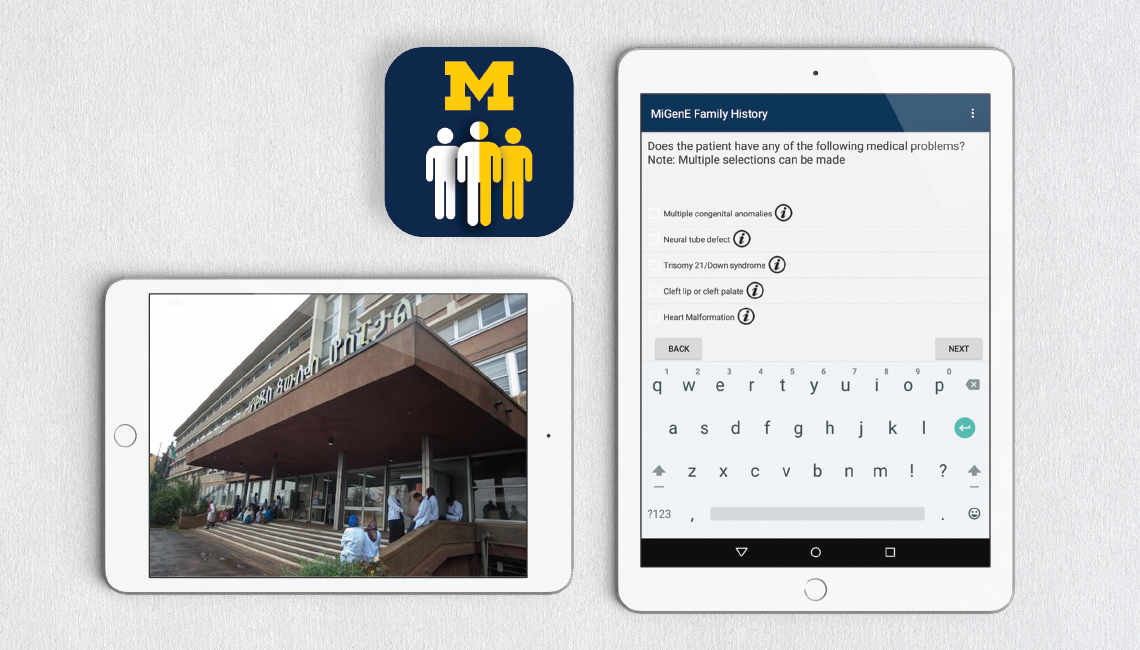
App helps spread awareness of genetics in low income countries


  This article brings attention to the fact that genetic research has been rapidly expanding with technology. Scientists are able to do things that were previously only thought of as science fiction, such as edit genes, or scan a person's genome. Genetics is such a new science and the research is expanding constantly and may one day impact our daily lives. It is not impossible to imagine a society in which we scan a newborn's genome and identify certain diseases/health conditions they may be susceptible to acquiring later in life. However, it is important to remember that in some parts of the world, there is a lack of technological advances, infrastructure and lack of funds, in general, to support this kind of technology in the health field. These areas of the world are just as likely to have genetic defects/diseases compared with wealthy parts of the world and therefore deserve to have access to information that can predict the likelihood of genetic health conditions.

     This idea led a team to develop an Android app, called the MiGene Family History app, that tries to spread the knowledge and awareness of genetics in low and middle-income areas. The intention is for the app to be used by health care providers in low and middle-income areas, and it will serve as a means of collecting family history data and can tell families if their child is prone to developing certain genetic health conditions. The app has been tested on the small scale in Ethiopia and was tailored to focus on the development of pediatric birth defects and genetic diseases. They found that the health care providers found the app easy to use and that having this kind of data available can influence future decisions made by Ethiopia's ministry of health. The study also found that the rate of genetic defects/diseases was very similar to that in previously studied affluent countries, further confirming to the team to have some sort of technology to provide basic genetic information to those in low-income areas.

     I really enjoyed this article because it brought attention to one of the most important facts about genetics and genetic disorders: that genetic is based on randomness. Wealthy nations are susceptible to developing genetic disorders just like low-income areas. But this does not mean that they should be the only ones having access to important genetic information that can possibly decide whether or not a couple wants to reproduce. I think it is important that people in these low-income areas are at least knowledgeable in some of the rapidly expanding research around genetics. This is information that I hope one day everyone can have access to, because genetic information can really influence crucial life decisions. If scientists really wanted to help everyone, then I hope one day that this kind of technology becomes affordable to everyone because if the technology and information is available, it would truly change the world if everyone that wanted to take advantage of it had access to it.

Article:
https://www.usnews.com/news/best-countries/articles/2018-09-11/how-an-app-helps-to-collect-genetic-data-in-ethiopia-and-ghana

Related article:
https://www.nature.com/articles/s41436-018-0069-6

Sunday, February 7, 2016

Error in DNA Study of First Ancient African Genome

In October of last year, the first ancient human genome ever found in Africa was reconstructed. Dr. Manica and his colleagues' research was based off of the 4,500 year old Mota man. The skeleton was given his name from the cave he was found in Africa. DNA dating back to ancient times from this part of the world is hard to find because of its hot and humid climate. The limited amount of data and knowledge from ancient Africa allowed the geneticist's mistake to go unnoticed, that is until two other geneticist reanalyzed the results.
Dr. David Reich and Dr. Pontus Skoglund asked for the original data to help with their studies of ancient human populations. As the two Harvard Medical School geneticists reviewed Dr. Manica's work they came to the realization that it was incorrect. It became clear that the genome shared some DNA with Eurasians and was not as closely related to people in other parts of Africa as originally thought. The mistake made by Manica and his colleagues was relatively minor but had a huge impact on the overall results. Two programs were used in the research, one mapped the DNA while the other compared it to other genomes. From the one program to the other the format had to be changed, but the researchers neglected to do this. Unfortunately, bypassing this step caused for inaccurate data. 

 From Dr. Manica's results it was believed that the back flow that happened approximately 3,000 years ago when people migrated from the Near East back to East Africa spread all across the continent. This flow of humans supposedly explained why many Africans had DNA identical to Eurasians. When the mistake in the genome was found the geneticists found that only East Africans had similar Eurasian DNA. The original story of the back flow was true, but not completely accurate.

Although, a mistake was made it is still incredible that geneticist are able to collect data from thousands of years ago. Hopefully, this issue will help other researchers in the future to avoid making similar mistakes. Now that Reich and Skoglund have come up with the correct data we will be able to learn more about people from this time and location.

Saturday, October 10, 2015

Scientists Recover First Genome of Ancient Human


On October 8, 2015, a group of scientists recovered the first genome of an ancient human from Ethiopia. The DNA from the Ethiopian human is shockingly different than that of current day Africans still residing in the country.  Because the DNA is so different, scientists concluded that an ancient human had migrated from the vast East and that the group of humans had been scattered across the continent. The place where the fossil was found implies Eurasian Migration in ancient times. Joseph Prickell, an ancient DNA expert from the New York Genome Center says that this discovery "is a major milestone for the field." 

For years, scientists had doubted that any DNA could be recovered from ancient remains, but with this finding, there is hope that much older remains can have DNA extracted from them. Few scientists thought it possible to extract DNA from a fossil due to the fact that all other remains would quickly be wiped out by bacteria and fungi. In many cases, scientists were unable to retrieve any DNA at all from ancient humans. The conditions in which many fossils were found were in the tropic, where the moist environment would also contribute to the wiping out of any genetic materials. However, in recent years, it was discovered that ear bones preserve their genetic material even when all other bones have lost theirs.

This could potentially mean that there could be more humanoid and ancient human DNA discoveries if fossils are to be found intact. This gives hope for the field, and may provide some insight on more specifics when it comes to the sequence in which macroevolution occurred. Hopefully this will become another stepping stone in science's explanation of macroevolution and will also provide more evidence on how a species can change over long periods of time. I believe this genome will allow scientists to understand the way genes can mutate and change and will additionally help scientists to understand how much genetic variation had to occur in order to get to the current human genome. 

The original article can be found here
An article on the potential Eurasian migration can be found here