Showing posts with label Taste receptors. Show all posts

Wednesday, April 10, 2024

Understanding how humans perceive bitter tastes

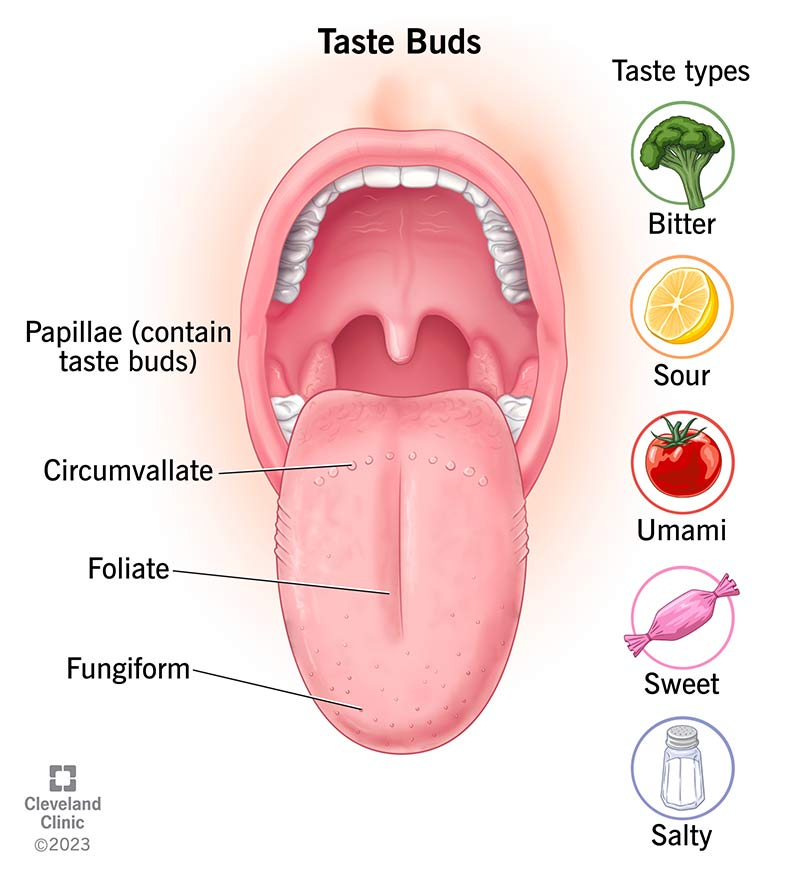
 Scientists from the UNC School of Medicine wanted to understand how humans perceive bitter tastes, starting with understanding the specific taste receptor. TAS2R14 is the bitter taste receptor which is a part of a bigger family of bitter taste receptors, the G protein-coupled receptor (GPCR) family. However, this specific receptor stands out because of its ability to identify 100 different bitter substances. Findings from the research concluded that when bitter tastants encounter the taste receptor, the chemicals wedge themselves to allosteric sites, which causes the protein to change shape and activates the G protein. The receptor being active sends signals to tiny nerve fibers in the gustatory cortex, where the bitterness is perceived. Researchers also found that cholesterol also helps bitterness tastes be perceived. Cholesterol puts the TAS2R14 receptor into a semi-active state so the tastant can easily activate it. The article explains, "While the exact role if bile acid or cholesterol in TAS2R14 remains unknown, it may play a role in the metabolism of these substances or in relation to metabolic disorders such as obesity or diabetes" (ScienceDaily). These findings have brought researchers closer to finding deeper connections between certain proteins and other metabolic processes. 

I think this new information is hopeful, especially for those struggling with metabolic disorders. I would have never thought that bitter tastes could be related to cholesterol nor that there were so many bitter taste receptors. I also find it fascinating how much information could be found from a protein site, with these findings, drugs could be put together to treat and regulate G proteins through allosteric sites, possibly changing so many peoples lives. overall, I thought this article was interesting to read and eye opening, realizing that though it may not seem like it, thousands of things are truly connected whether they seem like it or not. 


https://www.sciencedaily.com/releases/2024/04/240410112824.htm 

https://neurosciencenews.com/bitter-taste-perception-receptors-25896/ 

Tuesday, April 2, 2024

Do genes affect spice tolerance?

    Have you ever wondered why some people seem to relish the burn of spicy foods while others shy away from anything hotter than a bell pepper? The answer may lie in our genes, according to recent research articles. Let's delve into the fascinating world of taste preferences and the genetic factors that influence them.

    In a study titled "Why do some like it hot? Genetic and environmental contributions to the pleasantness of oral pungency," by the National Library of Medicine researchers explored the pleasantness of oral pungency, particularly in response to spicy foods. This study, involving young adult Finnish twins, revealed intriguing insights into how genetics and environmental factors shape individuals' responses to spicy sensations. It indicated that genetic factors accounted for a significant portion of the variation in the pleasantness of oral pungency and spicy foods. Individuals were categorized into non-likers, medium-likers, and likers based on their responses, highlighting the diverse nature of taste preferences influenced by genetic predispositions.


    Additionally, according to a study titled "The Health Risks of Eating Extremely Spicy Foods," conducted by urgent care provider Allan Capin, MD, the allure of spicy foods is not merely a matter of personal preference; it's deeply rooted in genetics. Capsaicin, the fiery compound responsible for the heat in peppers, triggers heat receptors in the skin and tricks the nervous system into reacting as if the body is overheating. This sensation, akin to putting your hand over a flame, varies in intensity depending on individual tolerance levels and genetic predispositions.


    These findings offer valuable insights into the diverse nature of individual food preferences and the underlying genetic components of oral pungency. Understanding the genetic basis of taste preferences can pave the way for personalized dietary recommendations and the development of tailored food products that cater to varying taste preferences.


    For consumers, this research sheds light on why some people are drawn to spicy foods while others find them intolerable. It underscores the importance of considering genetic factors in understanding and accommodating individual taste preferences. Moreover, for food manufacturers, this knowledge can inform product development strategies, allowing them to cater to a broader range of consumer palates.


    The study on the genetics of taste preferences adds another layer to our understanding of human food behavior. By unraveling the spicy mystery, researchers offer insights that could revolutionize how we approach food consumption and product development in the future. Whether you're a spice aficionado or prefer milder flavors, there's no denying the role that genetics play in shaping our culinary experiences.


Sources:


https://health.clevelandclinic.org/health-risks-of-spicy-food


https://pubmed.ncbi.nlm.nih.gov/23010089/

Tuesday, May 2, 2017

Something New About the Senses

Image result for tasteThere is already a fair amount of knowledge about how genetics affects the way people like certain food compared to others. But what about your own taste perceptions? Bob Holmes wrote about his experience at Monell Chemical Senses Center in Philadelphia in the article Book Excerpt from "Flavor". At the center Danielle Reed was able to analyze Holmes' DNA by a saliva sample. He them performed a taste-test where he would sip the liquid, swish it in his mouth, and spit it into a cup. He then indicated how sweet, salty, sour, and bitter it tasted; how intense of an sensation; and how much he liked it. After this was completed he was able to compare these results to his genes. The gene T1R3 contributed to the receptors for sweet and umami, Holmes was tested for a variant of that. Holmes ended up being a TT  which meant that he would be a sweet craver, however Holmes said he didn't prefer sweet things. But Reed explained that Holmes had rated the 12% sugar solution as moderately sweet and high pleasant. Holmes concluded that the link among genes, taste perceptions and actual food choices are not so simple. The sample complexity occurred with Homes bitter taste receptors. Reed then explained this confusion to me; sometimes what you taste isn't what you like, the brain can learn and correct the context. For example if you dislike bitter coffee but enjoy the wake-up jolt it gives you, it will soon become pleasant in your brain. So from this article I have learned that even though genes are connected to the kind of foods you're "supposed" to enjoy, you have the ability to over-ride the system. 

Flavor
Monell Chemical Senses Center

Wednesday, February 8, 2017

How carnivorous plants acquired a taste for meat


A new study shows the origins of carnivore in distantly related plants including the Australian, Asian and American pitcher plants, which appear similar to the human eye. Although each species developed carnivore independently, the team of scientist concludes that the biological make up required for digesting insects evolved in a strikingly similar. A genetic analysis, which included sequencing the entire genome of Cephalotus, found strong evidence that during their evolution into carnivores, each of these plants co-opted many of the same ancient proteins to create enzymes for digesting prey. Over time, in all the species, plant protein families that originally assisted in self-defense against disease and other stresses developed into the digestive enzymes we see today. 
I think this article is extremely informative about how genetics plays such a crucial role in all living organism. Even though these are just plants they can adapt, and can have something similar to taste buds in humans. Science seems to never fail me; these plants didn't have one or two evolutionary changes, but three. Its remarkable what evolution can produce over couples of millions of years. 

https://www.sciencedaily.com/releases/2017/02/170206111919.htm
http://www.nature.com/articles/s41559-016-0059

Friday, October 28, 2016

Customized Wine That'll Match Your Taste Receptor?


Vinome, a wine company based out of Northern California,  is pitching a selling point that their wine can be customized and made to fit the customer’s DNA. Although it may seem convincing that the wine company is capable of making one of a kind wines for customers that send in saliva swaps that can be compared to 10 different genetic variants. However, geneticist such as Dr. Jim Evans, a medical geneticist points out that there is not enough information to explain the genetics of taste buds. Human have different taste sensitivity to a variety of substances. The way in which individuals experience taste is determined by genetic mechanisms. Vinome is also promising that they will be able to analysis each individuals fitness and athletic training, weight and nutrition. This is also a promise the company has made that cannot be true because genetics involves complex genes and environmental factors.

            The company argues that with their team of geneticists they are not completely off track with determining what wines taste better based on genes for taste such as TAS2R38. There was an experiment done with 500 people to analyses 40 genetic variations. Each person taste different types of wine and fill out a survey towards the end of the experiment that asked the participants what wine they preferred. However, this did not convince geneticist because there was no control group in the experiment. The Vinome company should not use genetics as a way to sell their product. Although the company has their own team of geneticist it still seems as though the company is bypassing evidence that their products can keep the promises that they pitch of determining  the right wine for their customers.