Showing posts with label Nearsighted. Show all posts

Sunday, November 20, 2022

Near-Sightedness Linked to Genetic Variants and Education Level


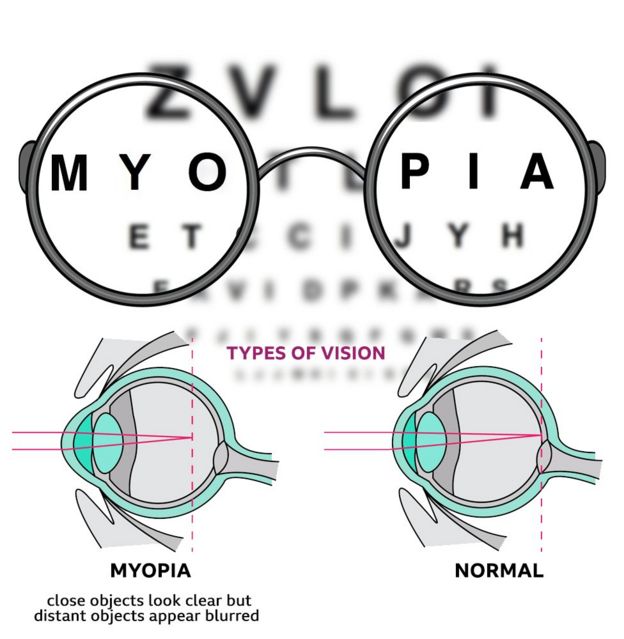
Researchers from Cardiff University in the United Kingdom conducted a genome-wide association study to understand how certain environmental and lifestyle factors influenced myopia. Myopia, also known as near-sightedness, or short-sightedness, affects the ability to see distant objects. Symptoms include eyestrain, headaches, squinting to see objects properly, as well as difficulty seeing objects that are far away. The researchers looked for genetic variations that may be linked to myopia in over 88,000 adults, using a standard eye test to determine whether participants had myopia. They found and identified 19 genetic variants that were found to be linked to different levels of severity of myopia.

The researchers also wanted to determine if there was a link between genetic variants, myopia, and the education level of individuals. Their results suggested that out of the 19 genetic variants, five were affected by education level. Two of the variants were previously linked to a study looking at myopia in individuals with east Asian ancestry. These genetic variants could help determine the risk of myopia in children in the future. The researchers also stated that more time in education is linked to more time indoors, which prevents individuals from spending time outdoors. Spending time outdoors may prevent myopia or stop its worsening. 

I found the article, and research itself, interesting because as an individual with glasses, it shows an insight into how my vision was affected by genetics and lifestyle/environmental factors. Although I’ve glasses since a young age, I know that the environmental factors in which I also grew up in, such as staying indoors and not going outside much, which worsened my vision. I also found it interesting how recent discoveries, such as this, brings a new light into how we can determine certain health conditions before it worsens. In the article, it stated that 30% of children with European ancestry developed myopia, while 80% of children with east Asian ancestry developed myopia, and I was curious about that. From previous knowledge, I know that east Asian education systems were much different than western systems, and wondered if that was a big factor into why the percentage difference was high.

Thursday, November 28, 2019

Study of Gene Changes in Retina

Image result for myopia pinterest

https://www.medicalnewstoday.com/articles/323299.php#1

Related Article:
https://journals.plos.org/plosbiology/article?id=10.1371/journal.pbio.2006021


A professor of Columbia University led a study that found that the development of myopia (nearsightedness) and hyperopia (farsightedness) involves different genes and cell signaling pathways. Myopia is a disorder in which the eye focuses, rather than precisely on, objects in front of the retina. The disorder is on the rise and usually develops when the eye grows too long. People with hyperopia have eyes that are too short, so it focuses images behind the retina. Scientists tested this on marmosets in which they placed a lens in front of only one eye for up to five weeks and let the other eye develop normally for comparison. The group reported variations in gene expression between the exposed and the non-exposed eye after the exposure time. Nevertheless, a contrast between those who had an eye that developed myopia and those who developed hyperopia found that the conditions were the result of the "activation or suppression of largely separate pathways." Also, 29 of the genes that changed expression were associated with myopia in humans in the same chromosome regions that large genetic studies had.

I thought this article was interesting because I am nearsighted. If I choose to want children in the future, I hope that a cure is discovered to either stop or reverse the effects of myopia.

Friday, April 13, 2012

Researchers Identify Gene That Leads to Myopia

Myopia, a condition that I suffer from, is also commonly known as nearsightedness.  Myopia is a very common eye disorder which is believed to result in other eye disorders such as: "retinal detachment, macular degeneration, early onset of glaucoma and cataracts"(Sciencedaily. 2011. Researchers Identify Gene That Leads to Myopia).  Professor Ohad Birk and his research group have discovered a mutation on LEPREL1 can cause myopia.

[caption id="attachment_4694" align="aligncenter" width="363" caption="Difference between a normal eye and an myopic eye"][/caption]

Specifically the LEPREL1 gene encodes an enzyme that is responsible for collagen in the eye.  Due to a mutation of LEPREL1 and its enzyme, it forms abnormal collagen which causes the eyeball to be longer.  Thus, light focuses in front of the retina rather than on the retina itself; therefore, resulting in nearsightedness.  I thought this article was interesting because I am nearsighted, so it helped me better understand why my eyesight stinks and I need contacts and glasses.  I will be interested to see what further research comes from this study and if there is anything that could be done to prevent myopia.