Showing posts with label APOBEC3. Show all posts

Monday, November 24, 2014

Genetics has allowed selected a small percentage to have a strong resistance or immunity towards HIV-1.

The HIV-1 virus as is widely known to cause Aids and that lowers the effectiveness of the immune system. In the article it states that the HIV-1 harms the individual, “by invading immune system cells known as Tlymphocytes, hijacking their molecular machinery to make more of themselves,then destroying the host cells.” The immune system is a system that keeps the body in check of sickness and diseases; it is what fights foreign invaders that enter the body. Although the individual that acquires the HIV-1 virus is known to have their immune system weakens and even diminish to barely anything, and the individuals becomes more prone to sickness. This is a major concern for people, and it should since there is no fully effective cure to rid of the virus completely, but yet there are people out there that have a high resistant and could even label it immunity to the HIV-1 virus.  
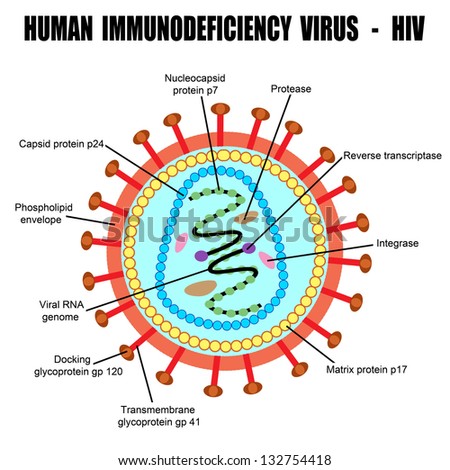
Image of a HIV-1virus that can attack immune systems cells.

Recent studies from the University of Minnesota suggests that there is a clue as to why these individuals show immunity and the answer lies in the cells that the HIV-1 has impacted. The body immune system has a defense against foreign invaders and HIV-1 is no exception, the body produces proteins titled, APOBEC3, that prevents the virus from replicating, but the virus has a counter of a defense that allows the body to be deceived and destroy the APOBEC3 that stopped replication of the virus. Studies conducted showed that individuals produces different levels of the proteins that fight back the HIV-1 virus, although the people showing immunity lack the ability to prevent the virus if it has a strong ability to produce the protein Vif, which makes the body destroy it own resilience. Overall the individuals showing immunity have to have met certain conditions and even with those conditions met they still have an internal struggle of the virus against their immune system.

This is a large step forward since now that there is a targeted identity now, researchers can targets the Vif of the virus to stop producing it’s counter defense, so the infected individual immune system can hopefully get rid of the virus. Although, personally knowing that there is an internal competition within the infected body, is a large concern since any serious illness or shock to the body can tip the favor to the virus.  

HIV-1 Resistant Genes


HIV-1 sickens some individuals rapidly, however, it has difficulty sickening others. There may be a genetic reason for this, if so it could be decoded and open many new treatment options for those effected. University of Minnesota researchers have been recently studying this issue and published work in PLOSGenetics on uncovering at least a small piece of this ongoing puzzle. This gives the science field hope for future discovers.
                HIV-1 invades immune systems called T lymphocytes and attacks molecular systems, eventually leading to the death of the host cell. This leaves the affected person with a destroyed immune system that is useless when it comes to fighting off diseases. T lymphocytes are a part of the APOBEC3s anti-body proteins that can stop HIV-1’s ability to replicate. HIV-1 has a Vif protein to counteract our body’s T lymphocytes defense. This make the disease more deadly and much more complicated to fight.
                Researchers have found that HIV-1 causes an increase in the production of APOBEC3s and APOBEC3H proteins. This gives us a hint that these two proteins are key in fighting HIV-1. Through separation of function mutagens, researchers found that some people have different levels of these proteins compared to others. Stable versions of these proteins were able to fight off HIV-1 virus with weak Vif, however, it could not fight off HIV-1 viruses with weak Vif. This shows that the virus has not fully evolved and perfected itself in attacking humans. Finding the link between APOBEC3s and APOBEC3H proteins in relation to fighting Vif can open doors for new medication and maybe even lead to a cure in the future.

Sunday, November 23, 2014

New Genetic Clues Found in HIV-1 Immunity.

         For many years, doctors have been perplexed on how some people are ravaged by the HIV-1 virus and others were able to avoid the virus from gaining a foothold in their immunity system. Researchers from the University of Minnesota may have found a weakness in the virus. This could potentially open a door to new treatments. 
         HIV-1 attacks T-cells (lymphocytes) in the immune system. The virus then attaches to the T-cell's molecular machinery destroying the original cells. The person is susceptible to deadly diseases and viruses. The T-cells are not completely alone, they have an anti-virus defense mechanism a protein called APOBEC3s "they have the ability to block the HIV-1s replication." Unfortunately HIV-1 also has a counter protein called Vif that cons the T-cells into destroying the APOBEC3s. 
          A research team decided to build on this original research led by doctoral student Eric Refsland and Reuben Harris of the University's College of Biological Sciences and Medical School. The researchers decided to take a closer look to see if there was a genetic variation in the susceptibility of HIV-1. They found that the "HIV-1 boosts one kind of production of the APOBEC3, the APOBECH." This led the researchers to believe that this was a main player in fighting the virus. The researchers used an experimental separation technique called mutagenesis. The researchers found that "different people have different strengths/potencies of APOBEC3H, with some proteins expressed stably and other inherently unstable." The stable variations were able to limit the success of the replication of the HIV-1 virus if the HIV-1 virus had a weak version of Vif. Unfortunately they were not able to stop the replication if the HIV-1 virus had a strong version of Vif. Refsland and Harris think the next step "is to figure out how to stop Vif from disabling the APOBEC3 enzymes."
       This article shows a potential new pathway that could lead to a cure for HIV-1 in the near future. This could help the millions of people that are currently diagnosed with HIV and family members that are affected. This is very early research, so you just hope that this cure pan outs, unlike so many other HIV-1 'cures' that have come before. 

Friday, November 21, 2014

Why some people may be immune to HIV-1

Link to the Article


Scientists have recent found a weakness in the genetic variation HIV-1 cells and the cells it infects that could explain why some people with HIV progress slower than others with the disease. The scientists have found that different people have different strengths of the APOBEC3H which is a protein that has the ability to block HIV's ability to replicate. They have found that some proteins were expressed stably and others were inherently unstable. The stable variations were able to successfully limit HIV-1's ability to replicate if it had a weak Vif.

This discovery can potentially open the door to developing newer and better treatments for those that carry the HIV viruses. This shows that HIV's infection process isn't completely perfect, and that there are still ways to fight back the virus even if it isn't permanently getting rid of the virus. There is still a way to stop, or at least slow down the replication process for HIV.