Showing posts with label #virus. Show all posts

Friday, November 22, 2024

Bats Don't Get Cancer, and Scientists Are Closer to Understanding Why


One of the worlds most under looked animals has it own super powers. Bats have the ability to avoid cancer and handle infections which would devastate others. The key to understanding these abilities is found in their genetic make up.

In a recent study conducted by Cold Spring Harbor Laboratory, analyzing bat genomes and comparing them to other mammals have allowed anticancer and antiviral genes to be found. The hopes of these findings is to in a way translate it into helping humans. 

Bats are extraordinary animals. They are known for having a long life spans, strong immune systems, and have low cancer rates. There immune systems are so resilient that they have allowed them to become a vector species as they can tolerate viruses without being effected by them. This has given them a bad reputation in the eyes of society. 

In this study 2 types of bat species genomes were sequenced. The Jamaican Fruit Bat and the Mesoamerican Mustache bat. Next comprehensive comparative genomic analysis was conducted comparing these genomes to other bats and mammals. The results were shocking. Noted were specific adaptations in six DNA repair-related proteins and 46 cancer-suppression proteins in bats. In comparing these genomes to other mammals bats were found to have twice as many cancer related genes. 

The hopes of this study is to further understand the bats cancer resistant genes linking to immunity and their immune system resilience. The goal is to help prevent cross-species disease jumps from animals to people by using bat immune system findings and to better understand the link between cancer and immune systems and possibly find a way to prevent it. 

I find this truly amazing. I personally have always loved bats and felt bad for the bad reputation they get for being vector species. But learning more and looking further into just why the make such good vector species and how they may help humans in the future I hope it will change society view about them. 

Links:

https://www.usnews.com/news/health-news/articles/2023-09-20/bats-dont-get-cancer-and-scientists-are-closer-to-understanding-why

https://www.science.org/content/article/how-bats-have-outsmarted-viruses-including-coronaviruses-65-million-years


Sunday, August 6, 2023

Gene That Could Lower HIV Levels In People Of African Descent

Some people of African descent tend to have a lower HIV viral load and a newly discovered gene might be the reason why. A viral load is the amount of infection in a persons system and it can vary due to a variety of different reasons and one of them being genetics. Given that Africa was hit the hardest with HIV infections, research was done analyzing the DNA of almost 4,000 individuals living with HIV-1 which is the most common type HIV. It was discovered that a region within chromosome 1 contained the gene CHD1L, which was associated with the reduced viral load of those who carry the virus. Although it is not yet clear how CHD1L is used in lowering the viral load, it is known to play a role in repairing damaged DNA. Researches created immune cells in which the CHD1L gene is switched off and discovered that HIV tends to attack those immune cells and it replicated more efficiently in an immune cells called a microphage when the CHD1L gene was again switched off. Since there is still a million new infections a year and with no cure, the next step in helping control HIV is to learn how this genetic variation helps in reducing the HIV viral load. 


Saturday, February 16, 2019

Rabbits Evolved Resistance to Myxoma Virus

In the 1950's scientists released the myxoma virus to rabbits in order to reduce the rapidly growing population size. This worked until rabbits became genetically resistant to the virus over time, and sparked interest amongst researchers at Arizona State University who partnered together with University of Cambridge. In Science Direct's article entitled, "Hop to it: Researchers evaluate rabbits' evolved resistance to myxoma virus", it discusses the findings found at the Grant Mcfaddens Center for Immunotherapy, Vaccines and Virotherapy that validate the gene held responsible for the resistance and possible replication for potential use of treating cancer.


As said by a scientist at the center, "The idea was to sequence examples of many rabbit genomes of all three places (Australia, France, and the UK)…..and came up with a half dozen gene variations in common--our job was to determine whether these variants of genes affected that virus in a lab setting." It was then discovered that the trend seen in the three geographically distinct locations served as an example of co-evolution operating between viruses and their host.

Researchers in the UK used modern sequencing technology to sequence rabbit genomes to past populations and the population now for comparison. At this time McFadden and the center determined whether the genes found correlated with antiviral effects by testing the virus in cell culture. By doing this as a group the scientists validated the role of genes in viral replication, and still serves as a great example of co-evolution.

-picture credit to google images

Monday, December 3, 2018

Scientists unveil promising new HIV vaccine strategy

Env is a protein involved in the HIV virus. Scientists have known its function and purpose in the virus for a while, but have not been able to produce a vaccine that counteracts it, until recently. The purpose of Env proteins is to break into host cells and cause infection. They can change their shapes to get into different cells through different receptors, and that's why it has been so difficult to create a vaccine targeting them. The new vaccine should be able to modify a short section of the Env protein, and keep it in the "pre-infectious" state, so that even if it does get into the cell it cannot infect it. This vaccine has worked in mice and rabbits and is currently being tested on monkeys. The scientists claim that this vaccine elicited antibodies in just 8 weeks in mice, making it the first vaccine to elicit such a desirable response.
This vaccine could be a great step forward in the field of medicine. Creating a vaccine for HIV would help so many people live longer, healthier lives. If this vaccine makes it to the public, it will definitely take off. We have been searching for an HIV vaccine for so long, and it's so reassuring that there has been a breakthrough. Getting rid of HIV would be such an advantage to humans because now we wouldn't have to worry about passing on the disease or receiving it from someone else. Many cases of HIV transmittance happen because people are unaware that they have the disease, so creating a vaccine would get rid of that all together. I think this is an excellent use of resources, and I hope this vaccine proves successful.

link: https://www.medicalnewstoday.com/articles/17131.php
article: https://www.sciencedaily.com/releases/2018/11/181126105516.htm

Sunday, April 15, 2018

New insight about how viruses use host proteins to their advantage

Researchers at Uppsala University discovered a host protein that many viruses use as their transport gene when infecting their host and growing throughout the body. Viruses first infect the person, and use the host's own body cells to and mechanisms to jumpstart their takeover of the body's systems. A human gene called ZC3H11A has been known for almost 20 years yet the functional importance of the gene remained unknown. Because of this curiosity of this gene, the researchers decided to use gene-editing to turn off the gene in the human cells, since the gene was considered to be unknown in terms of purpose. The result of this inactivation displayed that the gene played no major role in the growth of human cells in the body, which was slightly disappointing to still not find its purpose. With this knowledge in mind, the researchers then decided to conduct an experiment to infect the human cells lacking ZC3H11A with a virus infection and the results were astounding.
When infecting the human cells lacking this particular gene resulted in a drastic reduction in virus growth. The theory was then tested again with 4 different kinds of viruses, HIV, adenovirus, influenza virus and herpes simplex virus, and all had a similar conclusion. These viruses need ZC3H11A to act as a transport protein, so that these strong viruses can use to latch onto and spread more of their virus cells to the rest of the host. This is very surprising however, considering that the host protein is usually shut down when the host is infected with a virus, but to benefit the virus, the cellular mechanism for RNA transport was able to be taken over for their own advantages to multiply and reproduce more efficiently and quickly. Knowing this information now can serve a major purpose in the future, specifically for anti-viral therapies and finding ways to use this information to our own advantage. In my opinion, this is such a major step to eliminating the virus from the moment they infect a person, because if a strong enough method is developed to stop the virus from reaching this transport protein, then there would be a significant amount of virus cells to deal with. All these viruses listed like HIV, adenovirus, influenza virus and the herpes simplex virus are all not simple to treat, they all have their strengths as viruses do, but knowing the first step of these virus' processes when beginning to infect the host, is highly important information and the first step to eliminating the virus from becoming a major problem that can potentially never be treated.

For more information on this article: https://www.sciencedaily.com/releases/2018/04/180402160754.htm

To read the study done by the Uppsala University on the ZC3H11A gene and what it could mean for viruses: http://www.pnas.org/content/early/2018/03/30/1722333115

Ebola: Overestimated mutation rate


Image result for ebola cell

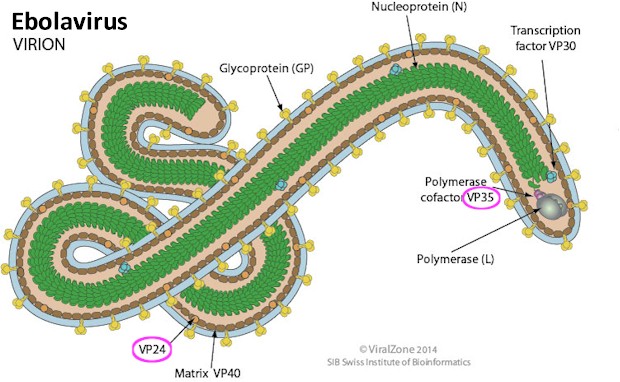
At the point when Ebola formed into a pestilence in 2014, a global group of researchers assessed that the pathogen's genome would change by and large every 9.5 days, in view of infection tests and PC recreations. This gauge is an atypically high rate of progress. Regularly, the Ebola infection genome just changes at simply under a large portion of that speed. The high transformation rate prompted fears at the time that if the infection quickly changed, it could likewise rapidly turn out to be more harmful.


Be that as it may, in later investigations, scientists assessing considerably bigger quantities of infection tests couldn't affirm the high rate. They demonstrated that when seen over the entire pestilence, the pathogen just changed at its run of the mill moderate speed.

ETH Zurich analysts have now demonstrated that the high evaluated change rates toward the beginning of the scourge were because of the set number of infection tests at the time in blend with the PC models utilized, which compute the appraisals utilizing hereditary information from infection tests and from fundamental presumptions.
Image result for ebola cell


Link: 1 & 2 are available if you want to follow up and read the complete article!

Sunday, January 28, 2018

The Flu Outbreak

The flu, one of the most deadly epidemics that broke out in 1918 and killed as many as 50 people. It is a virus infecting the respiratory system. There are three types of flu viruses which include the following: Type A, B, and C. Type A is the worst virus to obtain and is the virus that broke out and killed those 50 people in 1918. The best way to protect yourself from the flu is to get an annual vaccine. Scientists develop a new vaccine every fall. Getting vaccinated before flu season reduces your chances of getting the flu and helps you to recover faster if you do get it. The most common symptoms are fevers, chills, body aches, and weakness. Influenza is caused by a virus that is spread by touching a surface a person with the flu has touched and transmitting the virus to your mouth or nose.
There are many risk factors that arise in young children and adults from complications of the flu such as: chronic illness, pregnant woman, working in childcare, working in health care, etc. The best treatment care is bed rest and drinking plenty of fluids. Over the counter pain relievers also help reduce fevers and muscle aches. The flu is a serious virus to take precaution to. Not only does it make the body weaker but it has killed multiple people. It is important to sneeze and cough properly when sick and around others, also to constantly wash your hands. The flu is very contagious and is constantly spreading from one person to the next. Most people with a healthy immune system get over the flu in about 2 weeks. Approximately 35,000 people in the US die of the flu each year.


https://www.umm.edu/health/medical/altmed/condition/influenza


https://www.washingtonpost.com/news/to-your-health/wp/2018/01/25/heres-what-you-should-know-about-the-flu-season-this-year/?utm_term=.24f8a08bc18c

Sunday, November 12, 2017

Rift Valley fever virus: An infection mechanism identified

       To most people, mosquitoes can be a nightmare; however, when their bites are life-threatening, they can cause a nightmare to turn into a reality. The Rift Valley Fever Virus, transmitted by mosquitoes is responsible for outbreaks in livestock in Africa and can be fatal to humans. Scientists from the Institut Pasteur and the CNRS, working with the University of Göttingen, recently characterized the mechanism used by the virus to insert one of its envelope proteins into the host cell membrane, enabling it to infect a cell. Their finding was officially published in the journal Science on November 3, 3017. 
        RVF Virus has caused significant public health threats in the past, as well as, economic difficulties amongst those in Africa who make a living off their livestock. People who are exposed and have contact with infected animals are at very high risks to catch the virus themselves and they can also easily get bitten by a mosquito themselves. In 2000 the virus was spread out of Africa into Saudi Arabia and Yemen which gave a reason for people to be concerned that it may extend further to Asia and Europe. 
        Not only were the scientists able to find the specific mechanism used by the virus, they have also determined the atomic structure of the protein-lipid complex and realized it had a "recognition pocket." This finding was especially important because it is found in other viral families transmitted by arthropods such as the Dengue, Zika, and Chikungunya viruses. These viruses have caused major worldwide epidemics in recent years and by understanding the mechanism that inserts the virus into the cell membrane, therapeutic agents can begin developing.  The aim here is to prevent pathogenic arboviruses from merging with host cells and hopefully stop such mosquitoes from the harm they are inflicting. 
        I'm thankful to the scientists who put effort into observing mosquitoes to find the infection mechanism that is used by the virus. I have learned about many the devastating epidemics that have occurred over the years, (some of them so recent) and I believe this discovery will make great changes in the future. I can see how much pain, loss, and tragedy the viruses brought upon the world and finding a way to prevent such outbreaks from happening may eventually save millions of lives. 

https://www.sciencedaily.com/releases/2017/11/171109131158.htm
https://phys.org/news/2017-09-insight-architecture-viral-filaments-rift.html

Thursday, April 27, 2017

Roosters Teach Us How the Body Fights Viruses?

The human body is always fighting off infectious diseases such as bacteria, viruses, or parasites that want to take over cells. While cells in the body my fall to these enemies and be taken over, germ cells (sperm and egg) have a unique way of fighting off these little beasties. It turns out that to protect genetic information and pass it on accurately, germ cells have what is called piRNA. PiRNA is found mostly in the testes and ovaries and protects germ cells by subduing genetic sequences of intruders. This is a cool discovery and can maybe be used to create something like piRNA that we can use as medicine to cure sickness caused by some bacteria, viruses, and parasites.


https://www.sciencedaily.com/releases/2017/04/170427112149.htm

https://elifesciences.org/content/6/e24695

Wednesday, April 19, 2017

What is Dengue fever


Have you ever heard of dengue fever? It is a viral disease transmitted by a certain mosquitoes. It causes very high fevers and muscle pain. The dengue fever can be deadly in some cases, there was around 20,000 deaths last year. Researchers focused on the disease in Bangkok, mainly on the way the disease is spread. Researchers have come to conclusion that there is a pattern for the spreading of this virus. They found that nearly sixty percent of the fever cases within a 200 meter radius were closely related. Researchers will now use this information to map the location of the cases. They have found that if they know the person who is affected, they are a good indicator of where the new cases will occur. If they can map how the virus spreads this could further knowledge on how to kill the pathogen. Thailand is spraying to kill mosquitos to keep the infection rate low. Also researcher are looking for a vaccine for this virus. I have never heard of this virus so to learn about it is very cool. I did not know this was going on in Thailand, and to learn about it betters our knowledge incase this virus spreads here. 


Article: https://www.sciencenews.org/article/dengue-fever-spreads-neighborly-way

Related article: http://www.sciencedirect.com/science/article/pii/S0140673602099646

Friday, April 14, 2017

Virus may cause celiac disease


A study recently done in mice shows that a very common virus, T1L may cause celiac disease. This goes along with many studies in the past, that viruses can alter the immune systems response to food. This virus when affected could trick the immune system into attacking the food molecules. Terence Dermody did the study at University of Pittsburgh. He found that the virus first blocks the immune systems regulatory response that tells the body the food molecules are safe. After that is blocked, the virus sends a harm inflammatory response. Individuals who are infected with celiac disease, their body sees gluten as a harmful substance and attack it. Dermody says there are more viruses than just the T1L virus that can manipulate the immune system. The key part is when the gluten cells meet the mesenteric lymph nodes. This is where the decision to attack or not happens. The virus effects these nodes and cells and makes them think that the gluten food molecules are dangerous. This article is very relevant to most people today. A lot of people have stopped eating gluten due to the fact that it makes them sick. This may lead to further knowledge on diagnosing  celiac disease, and even preventing it.  


Related article: http://science.sciencemag.org/content/356/6333/44
Article: https://www.sciencenews.org/article/common-virus-may-be-celiac-disease-culprit

Tuesday, April 4, 2017

Novel drug delivery beats swine flu at gene level


Scientists found a new approach to deliver anti-viral RNAi to target cells against the H1N1 influenza virus. This new method proposed by scientists involves focus on training the human body to produce interferons faster. Scientists are suggesting to use hybrid spherical microcontainers that contain antiviral RNAs to activate the cell immune system. During their study, they used short interfering RNA with microcontainers to interact with the matrix RNA of the influenza virus and found that it lead to the degradation of the viral RNA. By doing this, the viral gene expression is reduced and enhancing the body's immunity against the influenza virus. After their first study by using this new method, tests showed that there was a drop of about 80% in the amount of virus proteins. It seems that scientists are getting closer and closer to the solutions to neutralize viruses like the H1N1 virus.

Tuesday, March 28, 2017

Genetic Structure of Avian Influenza Viruses from Ducks of the Atlantic Flyway of North America


https://wwwnc.cdc.gov/eid/article/12/11/06-0652-f1

Original Article

Further Information


Ducks, like most wild avian species are hosts to a pool of influenza A viruses. Even though scientists have a growing number of avian influenza virus (AIV) genome sequences, their understanding of the genetic structure and transmission in waterfowl in North America is still limited. The Atlantic flyway, located on the eastern shore of the United States, is lacking on knowledge about AIV. To further their knowledge, scientists analyzed 109 AIV genome sequences from waterfowl from the Atlantic flyway to determine their genetic structure, observe gene flow compared to other birds in various locations along the flyway.. The experiment included 25 AIVs from ducks gathered in Newfoundland, Canada, and 84 duck AIVs dispersed throughout Atlantic flyway. High amounts of diversity of viral genes and genomes were identified in the 109 samples tested. Transmission between continents were very small, roughly 2%, while the rate of transmission between North American flyways is much more abundant, roughly 75% of the genes could be linked to genes found in the other three North American flyways, namely the Mississippi, Central, and Pacific flyways.


The take home message of this article is that AIV, like most avian viruses, are spread through close contact and proximity. It is expected that most of the genes and genomes would be similar or linked in a specific flyway since most ducks migrate within species and stay in relatively close proximity as they travel up and down the flyway. The reason the rate between contents are so low is because the only time the two birds are in contact during mating, this only happens in some species, or if a flock is blown off course by a strong trade wind.


Thursday, March 23, 2017

Zika Attacks...Babies

        In the article, Birth Defects Rise Twentyfold in Mothers with Zika, C.D.C. Says, how Zika is dangerous to pregnant women. Zika does not necessarily harm the mother but harms the baby. The babies affected by Zika mostly are born with extremely small heads, brain abnormalities, eye defects, and central nervous problems. These birth defects are common in babies who become in contact with Zika while in their mother. It is transmitted through a mosquito’s bite. The mosquito must carry the disease to transmit it. There has been an increase of babies with these birth defects from 2013 to 2014 according to this study which involved the states of Massachusetts, North Carolina, and Georgia. Out of every 1,000 births there was about an increase of 55 babies to be affected by Zika. Personally, I believe a pregnant woman should not travel to where the Zika virus is present. I do not think it is smart for a pregnant woman to take the risk and travel because it is heart breaking to see a child born with defects that they will live with the rest of their lives. Sometimes babies are not born with defects but can develop abnormalities as they grow up. Even if the pregnant women must travel for work related reasons, I still do not suggest to travel. The mother can try to make a compromise with their boss. I asked my mother how she felt about this and she stated, “It is a scary thought to think that I could be the one to make my child have birth defects because of traveling to a country where Zika virus is spreading. I would play it safe and not choose to travel there.” Once again, I agree with my mother’s opinion as well.