Showing posts with label #genome #sequencing. Show all posts

Friday, October 18, 2019

Genome Sequencing Concentrating In Breast Cancer


https://www.sciencedaily.com/releases/2019/09/190930114754.htm
http://molecularcasestudies.cshlp.org/content/1/1/a000570.full


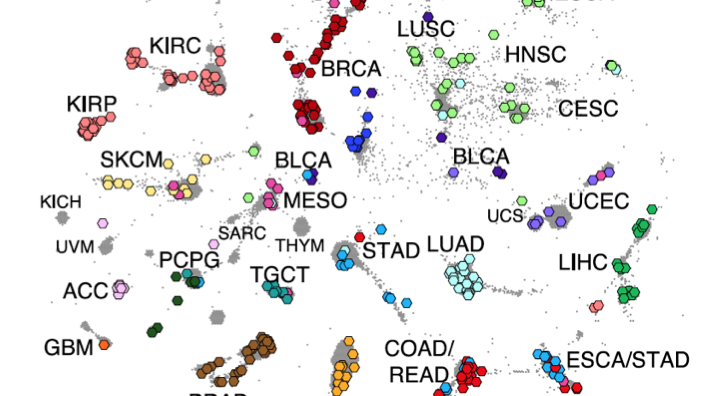
Whole Genome Sequencing (WGS) is a technique that reads an entire blueprint of the individual cancer cells, and comparing it to that of a healthy individual. Researchers are looking into the mutations on each gene, and really getting a good reading on them. They feel they will eventually be able to identify the acts of this tumor. Cambridge University has teamed up with researchers in Sweden, as well as having patients since 2010 with breast cancer, working with this topic. The researchers first started off with focusing on the woman who had triple negative breast cancer, a cancer that lacks the three receptor sites. These accounts rarely happen, and they have around a 9% chance of happening within all types of breast cancers. Dr Serena Nik-Zainal from the University of Cambridge states, “Having a complete cancer genome map for each patient helps us to understand what has caused each patient's tumor and treat each individual more effectively.” Before the Whole Genome Sequencing technique was used they would need to have a descriptive pedigree of cancer in the family. Genes for breast cancer stem from BRCA1, and BRCA2. Understand the whole genome map will allow doctors to treat patients individually and give correct treatments right away rather than having a trial and error affect, which takes time and cancer does not wait.


This is an amazing research project. It hits home for my because my sister was diagnosed with stage three breast cancer when she was only 26. This is not a normal age to have breast cancer and we needed to visit a genetics counselor to be able to map out what genes caused this. In her case, no genes were found to be receptors of cancer, they could not find the reason for her diagnosis. I hope this research leads to discoveries of cancer killers, and I hope this saves many lives in the future to come! Having the genome mapped out for each individual caner would be amazing because this means the trails and errors of different medicines for certain cancers would come to an end, and no time would be wasted. Time cannot be wasted with caner, cancer keeps going and never stops!


Monday, November 19, 2018

Why Siberian Huskies have Blue Eyes


See the source image


23andme and other genetic testing services have increased in popularity all over the world and now it is also available for dogs. Embark Veterinary Inc., which is a dog DNA startup company, recently tested over 6000 dog’s DNA in order to determine what causes the piercing blue eyes in Siberian Huskies. After analyzing the data, the company discovered that there was a duplication of canine chromosome 18 near the ALX4gene, which is linked to eye development in mammals, was responsible for the breed’s distinctive blue eye color. Two genetic variants were already known to be the source of blue eyes in some breeds but did not explain the blue eye color in Siberian Huskies. This study was the first consumer genetic study done with animals and was also the largest genomic research ever conducted with dogs.

            This study is extremely interesting to me because I have three Siberian huskies and only two of them have blue eyes, the other has caramel eyes which match his fur. My family and I have always wondered why my one husky is not like my other two and this study finally answers our question. This study was done using consumer information by using online surveys and pictures, which makes it fast, easy, and cheap to obtain a lot of information and candidates. I feel like this study will be the beginning of genome sequencing more of our pets which can help genetic researchers discover more valuable information about them such as how phenotypes occur or even diseases.  

Wednesday, April 11, 2018

The Genome of a Cockroach


Recently the genome of the American cockroach was fully sequenced by Chinese scientists. The genome is larger than a human's and ranks as the second largest insect genome to be sequenced. Researchers are relating it's genome's length to its adaptability, hardiness and wide variety of adaptations which make it such a successful pest. Able to intake all sorts of 'food' (which can even include glue) and survive in all kinds of conditions, the American cockroach needs the correct proteins to deal with whatever situation arises. Around 1000 of the genes sequenced alone are thought to deal with picking up chemical signals in the cockroach's environment; essential to knowing if a potential food item is safe or not. There might even be benefits for humans found within the cockroach genome. Other genes, necessary for reproduction and growth could be utilized to create more effective pesticides. The genes responsible for the cockroach's incredible regenerative properties may have uses in the human medical field.
Animals, like the cockroach, which are nearly worldwide and amazing at adapting to new environments deserve to be studied more extensively as this team from China has done.

Article Link- https://www.nytimes.com/2018/03/20/science/american-cockroach-genome.html?emc=edit_nn_20180327&nl=morning-briefing&nlid=7903635420180327&te=1
Link-http://www.nature.com/articles/s41467-018-03281-1

Thursday, November 16, 2017

Genetics In Court Is a Very Messy Business

     
        In today's court system, anything that can be shown as evidence to a particular case is looked at carefully. A few situations have come up where the person being accused tried using the "my genes made me do it" excuse; however, there really isn't much that genetics can prove regarding behavior. As science continues to advance, geneticists and medical ethicists believe people will start using genetic predispositions to get them out of guilty verdicts. Scientists and lawyers are expressing that the lack of understanding of genetics and behavior could result in people misusing science in the legal system.

        A big problem is that genetic predisposition (i.e: violence) is not the same as the diagnosis of a mental disorder.
“The ‘my genes made me do it’ argument is problematic because there is no evidence that genes make a person behave in a certain way that is beyond their capacity to control or recognize is wrong,” says Dr. Paul Appelbaum, the director of Columbia University’s Center for Research on Ethical, Legal and Social Implications of Psychiatric, Neurologic and Behavioral Genetics.
Behavior can be associated with one's genetic makeup; however, no definite conclusions can be drawn solely based on genetic testings. If somebody has a genetic mutation for cancer, is it a give-in that he/she will get cancer?

        In the future, it may become easier for the court systems to get access to defendants' genetic information. If more and more people in society have their genomes sequenced, perhaps genetics can begin to play a role in an investigation. With that, much more information will be available to the courts and be useful if there is need to subpoena a case. Dr. Applebaum believes that in the coming years, this information might spur its introduction into court. He recommends that if it is to occur, courts should only allow genetic factors to enter an argument very, very slowly.

        In my opinion, genetics should not be a factor when looking at anyone's behavior. There is no basis to prove that a person's inappropriate behavior is even linked to inherited traits. If someone has a mental disorder due to genetic vulnerabilities, the diagnosis should be able to stand alone and his/her genetic background is irrelevant to the court case

http://time.com/2822174/genetics-in-court-is-a-very-messy-business/
http://www.sciencenewsline.com/news/2014060422000006.html

Monday, November 6, 2017

Pumpkin Genome Reveals Evolutionary History

Image result for pumpkins


      To  begin, I chose an article dealing with the recently passing holiday. Scientist at the Boyce Thomson Institute in Beijing were sequencing pumpkin genomes finding out a huge pieces to the unknown puzzle of genetics. The high functioning pumkin sequencing is sure to have some effect on finding genetic outcomes for agriculture and breeding processes. The two pumpkin species in this test were the Cucurbita Maxima and the Cucurbita Moschata. The overall goal of the experiment was to find specific linkage between genes and traits. The pumpkin has 20 sets of chromosomes which is larger than the average vegetable such as watermelon etc. It was discovered that a pumpkin in the experiment is a paleotrapoid because it is made of two ancient genome sequences.  "We were excited to find out that the current two sub-genomes in pumpkin largely maintain the chromosome structures of the two progenitors despite sharing the same nucleus for at least three million years," said Shan Wu, first author of the paper and BT (Sciencedaily.com). 
    Personally, I found this article to be very interesting. There is so much to still discover about genetics. We may know something then find something that alters the information completely. I thought this was a great example of progressive studies in the area of genetics. This article also made me realize that pumpkins are used for a variety of things in other countries not just appraised in October as we do here in the U.S. The Institute does a great job in describing its nutritious value. 


Source: 
Boyce Thompson Institute. (2017, October 30). Pumpkin genomes sequenced, revealing 
      uncommon evolutionary history. ScienceDaily. Retrieved November 6, 2017 from  
      www.sciencedaily.com/releases/2017/10/171030095428.htm

Friday, April 14, 2017

Goat Genetics

    Papadum the goat
(from https://www.nih.gov/news-events/nih-research-matters/researchers-use-new-technique-decode-goat-genome)

    Creating accurate reference genomes is important to understanding the genetics of humans and other vertebrates; it can be used to help track genetic influence of health and to facilitate the breeding of optimum traits in livestock.
      Currently, there are three methods of doing this; these are PacBio sequencing, optical mapping, and Hi-C; however, each of these techniques are time-consuming, costly, and, in the case of previous goat genomes, incomplete and fragmented. However, by combining these techniques in a single go, researchers were able to sequence the genome of a male goat; according to the actual research article, the genome produced was approximately a 400 fold improvement over previous attempts. In addition, previous attempts centered largely on female goats because of their double X sex chromosomes, which makes this endeavor all the more noteworthy. The researchers admit that there is still work to be done with improving misassembled scaffolding and working on improving the sequencing of the Y chromosome, but this overall serves promise to further increase the accessibility of genomic sequencing technologies.
     This applies to class in that we have previously discussed the initial costs of sequencing the human genome through the Human Genome Project and how costs have been declining over the years. This is just another step in this ongoing process. It also complements techniques learned thus far, such as PCR and SNPs, in arriving to quick genomic analyses.

https://www.nih.gov/news-events/nih-research-matters/researchers-use-new-technique-decode-goat-genome (review)

https://www.nature.com/ng/journal/v49/n4/full/ng.3802.html (Actual article)

Saturday, March 25, 2017

Tardigrades Genome Reveals Unique Adaptations


Tardigrades, also known as water bears, are microscopic organisms that known for their survival skills. They have been found in Antarctica, in hot springs, in the Himalayas and have even survived being in outer space. They can enter a state of extreme hibernation, where in some cases, all the water is evaporated out of their bodies and they wake up years later completely intact. Researchers are interested in plumbing their genome for the secrets to their resilience, Japanese scientists decided to sequence the genome of a different species of water bear, Ramazzottius varieornatus. Both Tardigrades genomes are almost completely unique, it is said that only 1.2 percent of their genes are the result of HGT. The researchers found several genome sequences that allowed them to survive these harsh conditions. They took their research a step further and compared it to human DNA, but couldn't find any connections in the sequence they ran through, they are still looking though.


Tuesday, December 6, 2016

Infographic: Partioning the Genome

To make sense of the genetic variation within species, researchers are turning to the concept of the pangenome.

 From the sequence of a single genome, it’s impossible to determine which genes are shared by all members of a species and which are possessed by only some. However, just one additional sequence offers the opportunity to distinguish shared and variable content. As more genomes are sequenced, more genes are discovered and some genes that were believed to be ubiquitous are found to be lacking from certain individuals. As a result, the estimated size of a species’s core genome—the set of genes shared by all members of a species—generally decreases, and the size of the pangenome—the set of all distinct genes in the species—increases.


VISUALIZING THE PANGENOME

A reference genome built from the DNA of an individual organism can be visualized as a linear sequence (top). But there is a growing appreciation that this sort of representation fails to reflect the diversity among individuals of a species, which includes not just sequence variation within shared genes, but often different genes altogether (middle). To visualize the genomic content of a species, researchers use interconnected nodes representing all possible combinations of genomic segments or genes found in a species
(bottom). Such an approach makes all known sequence information available simultaneously, instead of hiding some away as annotations describing how newly sequenced genomes differ from a linear reference.

Thursday, November 24, 2016

Living fossil Genome Unveiled

This article presents the genome sequence of Ginkgo biloba, the oldest extant tree species. The research was carried out by a team of scientists at BGI, Zheijiang University and the Chinese Academy of Sciences, who tackled and analyzed an exceptionally large genome, totalling more than 10 billion DNA "letters." Ginkgo is considered a "living fossil," meaning its form and structure have changed very little in the 270 million years since it first came into existence. Given its longevity as a species and unique position in the evolutionary tree of life, the ginkgo genome will provide an extensive resource for studies concerning plant defenses against insects and pathogens, and research investigating early events in tree evolution and in evolution overall.


To study the ginkgo's extraordinary biology at a genetic and molecular level, sequencing its genome was high up on the wish list of plant biologists. However, because of its size as well as the presence of an enormous number of repeat sequences, assembling the whole genome sequence would be a difficult task. The ginkgo genome stretches over more than 10 Gb, which is 80 times larger than the "model plant" Arabidopsis thaliana genome. The tree's genome is also larger than other plant species known for extremely big genomes, such as maize or orchids. The great interest in the history and biology of gingko, however, made the work of sequencing and assembling the genome a challenge the researchers from China felt worth taking, and one they succeeded in accomplishing.
Wenbin Chen from BGI explains some of the difficulties that they had to overcome: "A huge amount of raw data (~2 TB) was generated, and the computing capability for genome assembly was challenged by both the huge data and the remarkably high proportion of repetitive sequences. So an incredible amount of memory was required." He went on to highlight several genome features: "The large genome of ginkgo may have resulted from whole genome duplication and insertion of a remarkably high proportion of repetitive sequences, at least 76.58%, and the longest introns among all sequenced species due to insertions of transposable elements."

Meeting the sequencing challenge was worth it for a variety of reasons. One certainly relates to its status as a "living fossil," at title shared by few other species, including the horseshoe crab and the nautilus. As the only surviving representative of a highly unusual group of non-flowering plants that appeared at least 270 million years ago, the ginkgo has retained traits over millions of years, such as the emblematic fan-shaped leaves, that are not seen in any other surviving plant species surviving. It further holds a very unique position in the plant evolutionary tree.

Professor Yunpeng Zhao, one of the authors from Zhejiang University, explains how this evolutionary placement is of great interest to researchers: "Ginkgo represents one of the five living groups of seed plants, and has no living relatives. Such a genome fills a major phylogenetic gap of land plants, and provides key genetic resources to address evolutionary questions like phylogenetic relationships of gymnosperm lineages, evolution of genome and genes in land plants, innovation of developmental traits, evolution of sex as well as history of demography and distribution, resistance and conservation of ginkgo."

Researchers are also fascinated by the ginkgo's resilience under adverse conditions -- it is worth noting that ginkgo trees were one of the few living things to survive the blast of the atomic bombing of Hiroshima. This hardiness likely helped the ginkgo survive periods of glaciation in China that killed many other species, and may also promote the longevity of individual trees, some living up to several thousand years, according to reports. The ginkgo is also able to defend itself against a wide range of attackers, employing an arsenal of chemical weapons against insects, bacteria and fungi.
To better understand the ginkgo's defensive systems, the authors analysed the repertoire of genes present in the genome that are known to play a role in fending off attackers. An initial analysis of the tree's more than 40,000 predicted genes showed extensive expansion of gene families that provide for a variety of defensive mechanisms.

Genes that enable resistance against pathogens are often duplicated. Additionally, ginkgo has a double-knockout punch in its fight against insects by synthesizing chemicals that directly fight insects and by releasing volatile organic compounds that specifically attract enemies of plant-eating insects. These findings indicated that having multiple mechanisms -- the expansion of gene families, higher doses of specific genes, and versatility in its defence genes -- might be linked to the ginkgo's extraordinary resilience. This information may then be useful to aid in understanding plant defence system with an eye to improving food security.

Tuesday, November 22, 2016

Bat 1K Project

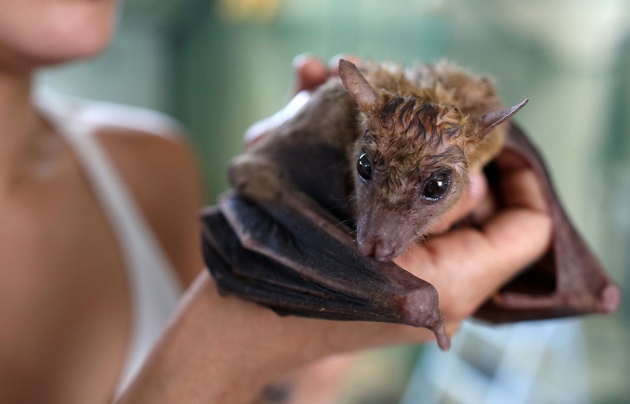
One of the main focuses, the mystery of how bats teach other bats how to whistle or make any of their standard sounds. Young bats use these sounds later on during courtship, mating, when they retrieve food, and defense. So far, only 50 bat species have been studied and all that was found so far is that the adult male bats teach the young bats how to speak just as children learn to speak from their parents. One gene, FOXP2, was identified to be linked to speech and language in bats because it is the same gene that has a role in how humans speak and learn sounds/language.


Some animals can communicate by singing or calling. Most people think of birds right away, however, four bat species also make vocal sounds. Scientists are interested in how bats are able to teach this melodies or sounds to their young. In efforts to uncover this mystery, the project called Bat 1K is now underway as of November 4. Not only are they studying the ability of bats to sing but they are also investigating how they are able to fly int he dark (echolocation), how their immune systems are so strong, and how their lifespans are considerably long. The oldest bat known to live was 39 years old which is equivalent to over a hundred years in a human due to their size. Bats are the longest-lived mammals for their size. In order to find out all this information, scientists are going to try and sequence the genomes of more than 1,000 bat species. 
After the genome is sequenced for these animals I would think that it would be fairly easy to identify the genes that allow them to communicate considering the one gene is that of a human. The study of bats was a wise choice when it comes to animals that use communication because they are relatively small in comparison to other communicating mammals like elephants and whales. Hopefully the discover of the gene in bats leads to the genes in these other mammals as well.

Source: 
http://www.nature.com/news/geneticists-hope-to-unlock-secrets-of-bats-complex-sounds-1.20997
(Other sources are linked in the text)