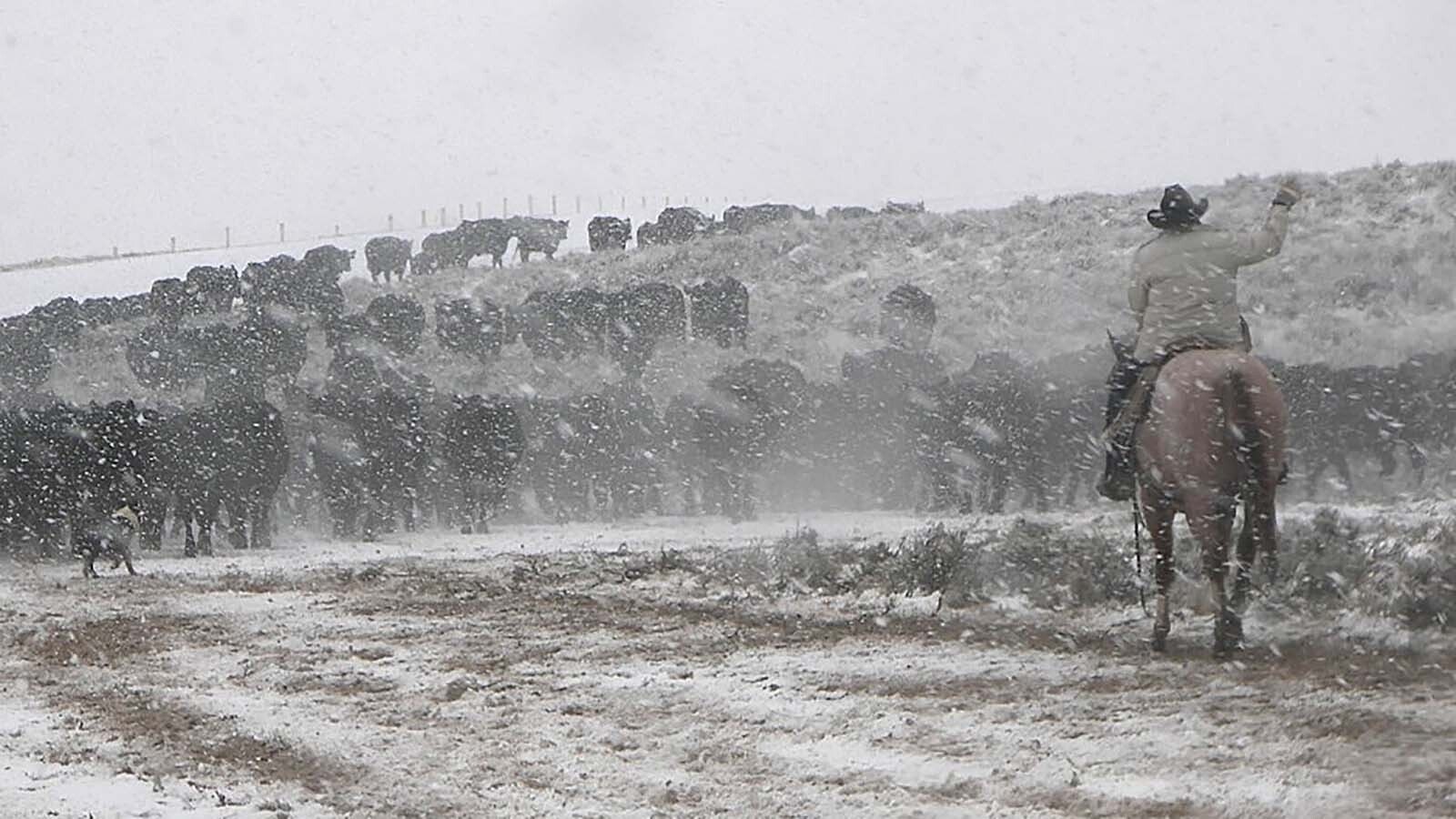
In Boulder, WY, there is a cattle rancher attempting to selectively breed his herd to endure harsh winter conditions by survival of the fittest. Because of its location, the ranch sees extremely harsh winters. The surrounding mountains make the air exceedingly dry, and allow wind to blow right over the area, leaving Boulder to be below freezing for eight months out of the year.
This lead rancher James Jenson to determine that his cattle need to be tough, and if he fattens them up artificially with extra rations, he sees that as allowing a "glass bubble" of genetics to grow and potentially burst, leaving his herd unable to cope with the weather. So over the last 40 years he has developed tests to see if cattle will do well on his ranch. He tests them for feed efficiency, how much weight a cow gained on a set amount of feed, and finds the most economically viable one to bring home to his ranch. He also tests to see which cattle could develop heart disease at high altitude, which would. an issue at his ranch that sits at 7,000 feet of elevation.
Jenson now breeds over 500 bulls every year,keeps the top 100 for his ranch and sells the rest to other ranchers, who have reported much better numbers using his technique. As a side effect, because the selectively bred cows require less food, they produce less methane saving the cattle industry emissions.
Overall, Jenson's approach allows cattle farmers to produce less methane emissions and spend less per cow, keeping their profits higher and letting the price of beef possibly come down in the future. This trickle-down effect will be critical for future US food security and could be a step forward in aiding the food crisis in America.
Source: https://cowboystatedaily.com/2025/11/24/rancher-in-boulder-uses-extreme-conditions-to-redefine-cattle-genetics/
Secondary source: https://www.thecooldown.com/green-tech/super-cows-rancher-breeding-livestock/

No comments:
Post a Comment