In Life Lessons From (Very Old) Bowhead Whales an article by the New York Times, research has found that bowhead whales, first hunted then loved by the Inupiat of Alaska, while initially reported to live two human lifetimes by the Inupiat has been found to live as long as 268 years possibly even longer. Evidence for improved DNA repair in long-lived bowhead whale published on
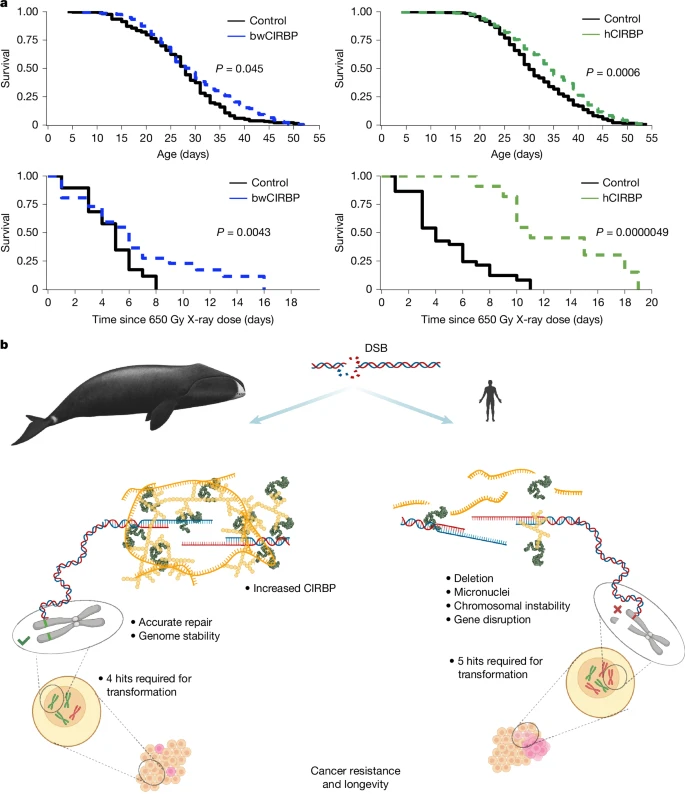
nature.com presents the cause of this phenomenon, an inducible RNA-binding protein CIRBP. This protein when introduced to human cells “enhanced both non-homologous end joining and homologous recombination repair… reduced micronuclei formation, promoted DNA end protection and stimulated end joining in vitro” (nature.com). This repairing of damaged cells supports the bowhead whale’s longevity and low cancer evidence.
Theoretically such a large animal weighing more than 88 tons should have larger rates of cancer. But the absence of any cancer evidence is extraordinary. If this CIRBP protein is responsible for such a feat and provided viable in human cells what are the practical applications? While there are currently no approved therapies to aid DNA repair perhaps this is the first step. The expression of the CIRBP promotes our genome stability, and side effects have not yet been seen. In the future if CIRBP becomes a method of gene therapy people could be treated before they develop cancer creating a nearly cancer free world.


This post was so interesting to read, these findings matter because this reveals new targets for cancer therapies. This also helps explain how large, long-lived mammals keep cancer in check. If this is at all able to be used to help human medicine that would be groundbreaking.
ReplyDelete