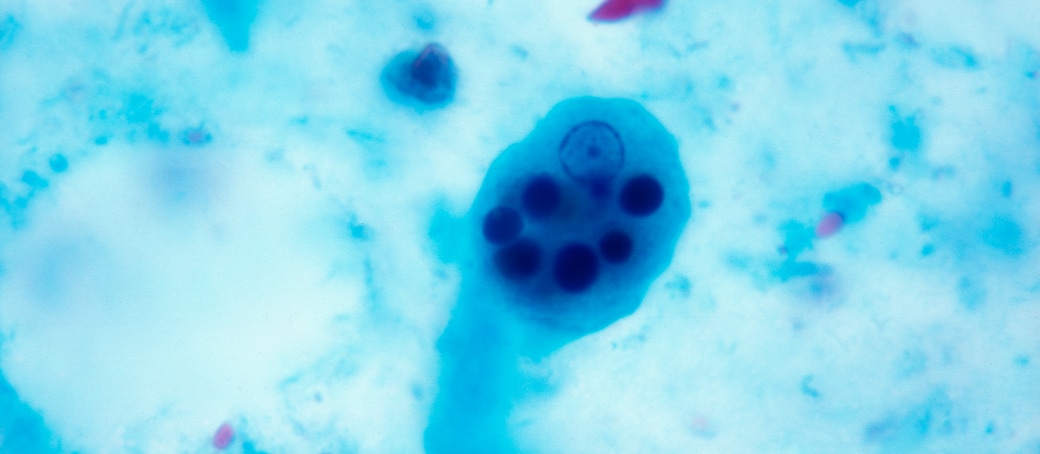
 Infectious diseases usually have two ways of being dealt with. One way by using medicines such as antibiotics to target and destroy pathogens, or the other by dealing with transmission causing conditions. New research shows the effectiveness of a new strategy; augmenting the human body to silence the mechanism that allows the pathogens to inflict disease.
Scientists at the University of Virginia School of Medicine were able to silence genes in human cells to induce immunity to entamoeba histolytica, which is a parasite that kills 40,000-110,000 and infects approximately 50 million people annually. The scientists used a process called RNAi to make a culture of bladder cancer cells with thousands of independent, silenced genes and then introduced the parasite to the culture. They found that some cells seemed to resist the parasite while all other cells were obliterated with minimal effort. These cells that resisted the parasite were then cultured over nine cell generations and re-exposed to the parasite and every time they were unaffected by the parasite. The cultures also became more and more enriched for cells lacking the specific genes making it vulnerable. Researchers found that many of the resistant genes were involved with managing the flow of potassium in and out of the human cells. Follow-up experiments showed that the parasite caused intestinal cells to expel potassium right before the cells died and the cells who were unable to transport potassium survived. This is a much needed discovery about this parasite because currently there is only one antibiotic available for E. histolytica and if the parasite becomes resistant to the antibiotic, then there is nothing that can be done for infected individuals.
Original article can be read here.

No comments:
Post a Comment